

"Is BYBIT safe, or does it just look feature-packed?" For people picking their first or switching to the next crypto exchange, what trips them up usually isn't an unfamiliar interface — it's focusing on promos, brand recognition, or someone else's recommendation, while ignoring KYC (identity verification), fee structure, real-vs-fake URLs, security settings, and whether you actually need a This guide first helps you judge whether it fits you, then breaks down the spots where most people slip up.
Platform Risk vs. Your Operational Risk
"When you ask whether BYBIT is safe, which type of risk are you actually worried about?" Some risk lives at the platform layer — public disclosures and asset transparency. Some comes from fake URLs, fake support, or weak account security on your end. Mix them together, and the answer always leaves gaps.
Platform-Level Safety — Which Public Signals to Check First
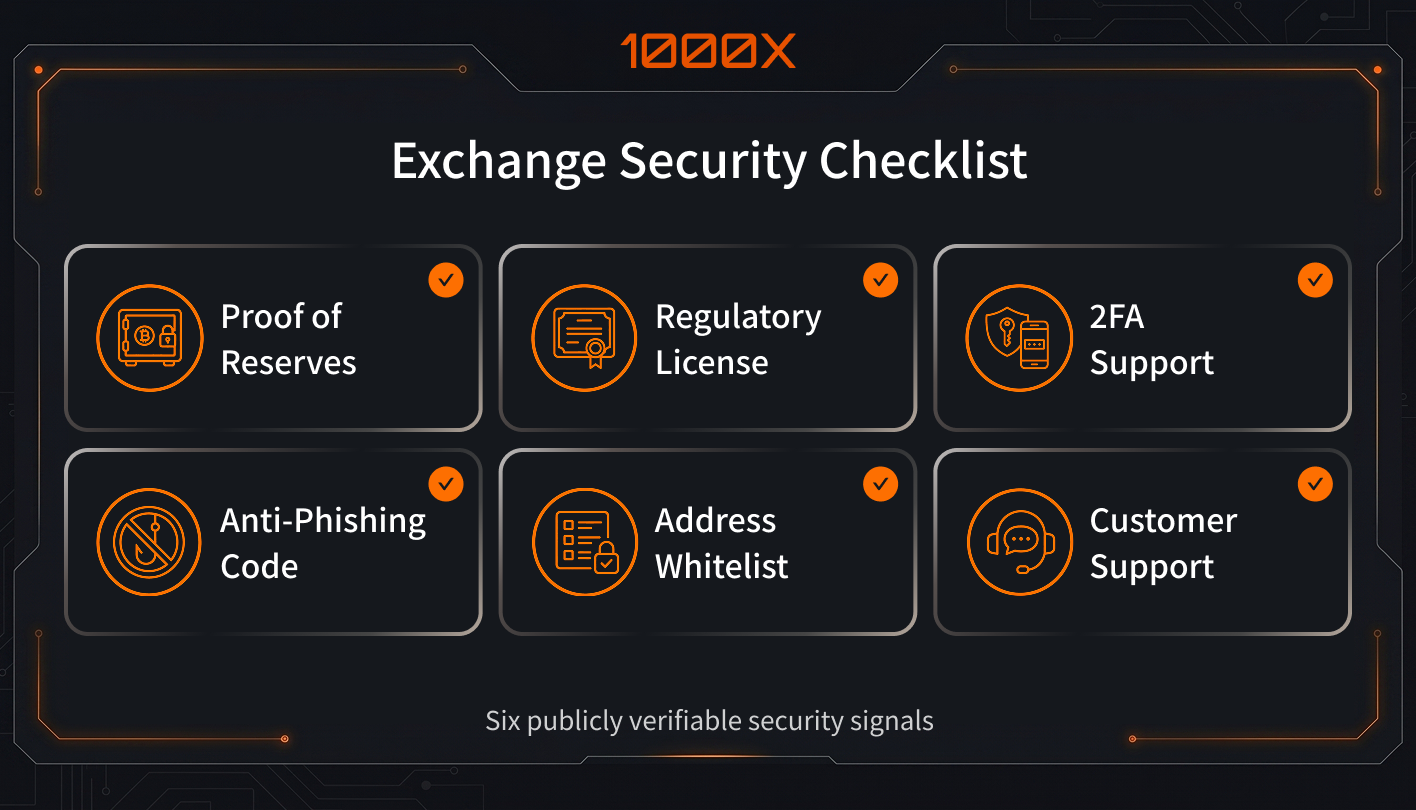
Is BYBIT safe? I don't start with a stranger's "works great" or "lots of people use it." I check whether the platform makes the key info public, and whether users can independently verify it. That carries more judgment value than any number of reviews.
- Asset transparency: BYBIT publishes Proof of Reserves and a reserve ratio page, plus instructions for users to verify whether their own account assets are included in the audit. It means you're not just passively trusting the platform's word.
- Clarity of fee rules: Trading fees vary by product type and VIP tier, with an officially maintained fee schedule. Whether fees are clearly explained directly affects whether this is a platform you can use long-term.
- Public, user-controllable security mechanisms: Anti-phishing code, account hardening, scam-recognition guides — all have official docs and operational walkthroughs. It means the platform lays out risk scenarios openly, not just "be careful out there."
Even if those public signals are reassuring, that doesn't mean the platform is "absolutely safe." How you log in, how you verify URLs, how you configure security settings — that's the next layer.
When learning about BYBIT, what people think about first is whether the platform will blow up; for most newcomers, what most often goes wrong is account verification, email judgment, and URL recognition. What really matters is the call you make
When learning about BYBIT, what people think about first is whether the platform will blow up; for most newcomers, what most often goes wrong is account verification, email judgment, and URL recognition. What really matters is the call you make , what most often goes wrong is account verification, email judgment, and URL recognition, it's the call you make before logging in, when reading email, before clicking a link. BYBIT now lists these as key security items, including 2FA, anti-phishing code, trusted devices, and authenticity verification.
Three things I'd tell newcomers first. First, don't log in from search results, group chat links, or DMs — you think you're entering BYBIT, but you may already be on a fake site. Second, when you get an email or SMS, don't just check whether the logo or layout looks right — check whether the anti-phishing code you set is in the message; official docs are clear that once enabled, real messages always display this code, missing or wrong = treat with caution. Third, an account isn't safe with a password alone — at minimum, enable 2FA, and check device login history regularly, because the issue , it's that you didn't notice an unfamiliar device signed in. If you skip those steps, even with the platform's own security in place, you can still get hit by a fake link or fake support first.
When sizing up an exchange, it's easy to first check reviews, community posts, or get pulled in by a referral code. Those aren't useless — but I don't treat them as my safety conclusion.
When sizing up an exchange, it's easy to first check reviews, community posts, or get pulled in by a. The reason is simple: reviews usually only reflect someone else's usage context, and referral codes carry promotional incentives. BYBIT's referral mechanism is built with rewards and commissions, so the sharer's emphasis isn't necessarily aligned with the risks a newcomer should care about.
To actually judge "is BYBIT safe," I'd look at whether the platform makes verifiable safety info public — Proof of Reserves, account security guides, the ability to enable 2FA, anti-phishing code, trusted devices yourself. Those are things you can actively check, far more solid than "I've used it and nothing happened."
Treat reviews and referral codes as "reference entry points," not as safety verdicts. A lot of newcomers trip up not by missing the bonus, but by trusting someone else's experience too early — and skipping URL verification, account security, fee rules, and feature limits that matter more.
Does BYBIT Fit Your Needs as a First Exchange?
"For your first exchange, do you start with how big the brand is, or what you actually want to do?" If you only want to buy crypto and occasionally withdraw, your priorities are completely different from someone running perps, chasing cashback, or wanting card payments. Don't reverse the order — match needs to features first.
If You Just Want to Buy Crypto, What BYBIT Basics to Check First
If you only want to buy crypto and aren't rushing into derivatives or BYBIT currently requires at least Standard individual verification for most products. Without it, many features become unusable.
Second, can you understand the deposit path? BYBIT supports crypto deposit, One-Click Buy, fiat deposit, and P2P trading. For newcomers, the goal isn't to pick the path with the most features — it's to pick the one you can actually complete.
Third, you're buying spot, not accidentally trading futures. Official docs cleanly separate spot from futures/perps. If you're just buying crypto, stay in spot — don't wander into high-risk product tabs from day one.
The fourth is whether you've filled in security settings. BYBIT's own onboarding flow puts identity verification and advanced protection at the front — that order is worth copying. For someone just buying crypto, verifying → deposit path → trading area → security check beats chasing promos as a starting sequence.
If You Care About the
On the it essentially lets you spend exchange funds on everyday purchases, some ATM withdrawals, or link to Apple Pay / Google Pay; supported features, fees, and limits vary by card tier and region, and BYBIT also explicitly states the card is currently only available in select countries/regions — not everyone can apply.
Things I check first. First, will you actually spend on it, not just feel like "having a card looks complete" — if you mostly buy and hold, the card isn't necessarily a priority. Second, does your region's card option support what you want (physical card? virtual? Apple Pay / Google Pay)? Third, remember it's a prepaid-card model, not a credit card — ATM, cross-border, and currency conversion fees and limits all depend on the local plan. Fourth, what's the actual fee structure
So if you care about Settle those first, then circle back to cashback. Right order, right judgment.
If a Referral Code Brought You Here, Don't Skip These Checks
If a an invite code is just an entry point, not the answer to whether this exchange is worth using. BYBIT's referral mechanism is tied to sign-up, deposit, trading tasks, and follow-on rewards — sharers naturally lead with the perks, not with the risks a newcomer needs to check.
You should look at: first, whether fees and total cost are acceptable. Trading fees, withdrawal fees, and product-by-product fee structures can't be papered over by a single one-time bonus — what affects your long run is the cumulative cost. Second, your actual usage needs: are you just buying crypto, or will you use the Card, withdraw often, integrate other tools? If needs don't match, the referral pull is illusory.
How to Read BYBIT Fees Without Missing Costs
"You think one number is enough for fees?" BYBIT's fees aren't a single type — trading fees vary by product and VIP tier, and withdrawals carry their own fixed fee plus network-by-network differences. Headline rate alone understates real cost. The next sections separate "looks cheap" from "actually costs."
Trading Fee, Withdrawal Fee, and Network Cost Should Be Read Separately
On fees, my take is one line — don't just stare at th…

A common newcomer mistake on fees: just staring at the rate shown on the trade screen. BYBIT breaks costs down cleanly: trading fees are charged at order fill, and spot, futures, and options each have their own rates, modified by Maker/Taker and your VIP tier. Non-VIP standard rates: spot 0.1%; perpetuals and futures 0.02% maker / 0.055% taker.
Second is the withdrawal fee. BYBIT's on-chain withdrawal fee is fixed by coin and network — not scaled by amount. Each withdrawal is charged based on the coin + network you select at that moment, and the page shows the minimum withdrawal threshold. For small withdrawals, the fixed-fee percentage becomes painful — beginners get bitten here most.
Third is the most overlooked — network cost and network-selection picking an unsupported network or transfer method may mean funds don't arrive — or are permanently lost.
When looking at BYBIT fees, the spot rate is the first thing that catches the eye — looks low, must mean low cost. I don't read it that way. Spot trading fees are just one slice of your total cost. BYBIT's current official fee structure shows that a standard account's crypto spot rate can go as low as 0.1%, paid at order fill — but that's only if you're doing spot.
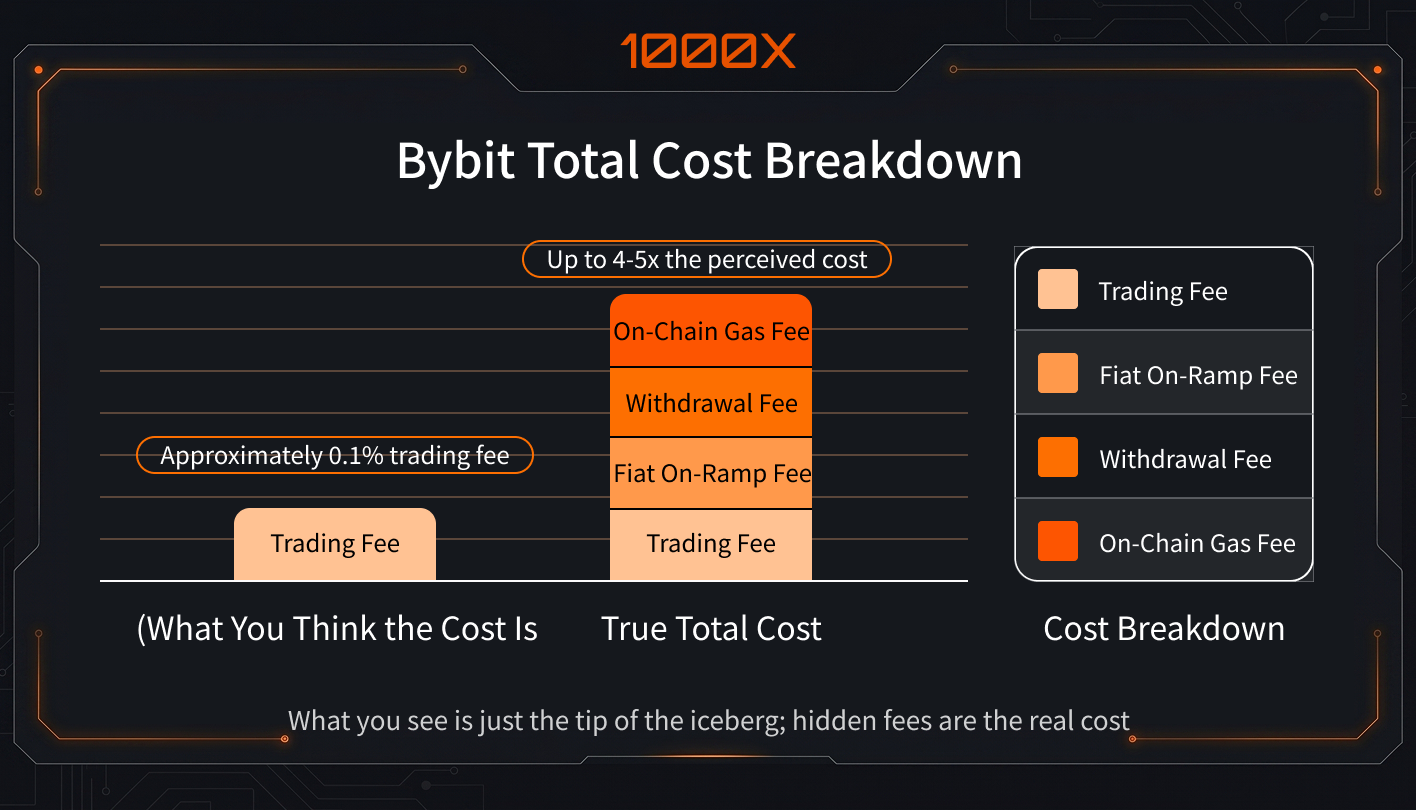
When looking at BYBIT fees, the spot rate is the first thing that catches the eye — looks low, must mean low cost. I don't read it that way. Spot trading fees are just one slice of your total cost. BYBIT's current official fee structure shows that a standard account's crypto spot rate can go as low as 0.1%, paid at order fill — but that's only part of the picture.
But the catch: it's that you're not always in the "pure spot matching" ideal scenario. If you use One-Click Buy as a fiat on-ramp, BYBIT spells out: different payment methods carry different provider fees, and the actual fee shows on the order page. "Low spot rate" doesn't equal "low total cost on this purchase."
Also, many people withdraw to another wallet or platform after buying — and the fixed withdrawal fee and network-selection cost reappear. BYBIT explicitly states withdrawal fees and minimum thresholds vary significantly by coin and network. Looking only at "cheap to buy" and ignoring the cost of moving funds later inflates how good a deal you think you're getting.
Which Use Cases Most Often Cost Beginners Money They Didn't Need to Spend
For newcomers, they know about the trading fee, but miss other places that also charge
- Small buys followed by quick withdrawal. On-chain withdrawals carry a fixed fee by coin and network, and each withdrawal looks at the minimum threshold. On small amounts, the fixed-fee percentage becomes painfully large.
- Going through One-Click Buy or a fiat channel. Convenient — but as the official docs state, different payment methods have different provider fees, some with additional fixed costs on top.
- Not double-checking the network and its status before transferring. Switching networks last minute, missing that a network is under maintenance, or skipping the coin/network check on the withdrawal page — any of these can cost extra processing, or force you to redo the whole flow.
One more easily missed: trying to withdraw your entire balance without subtracting the withdrawal fee. If you enter "amount equals received amount" without deducting the fee, you may get an "exceeds available balance" error. My three steps to close out cleanly: check payment method before buying, check fixed fee and network before withdrawing, recheck the received amount before confirming.
Day-One Security Settings That Block Fake Sites
"Account is open — am I safe to use it?
Lock in 2FA and the Anti-Phishing Code First
If you only do one security setting after opening an account, I wouldn't have you research a stack of advanced features — I'd have you set up 2FA and the anti-phishing code first. The reason is simple: one protects the login/verification flow, the other protects your judgment of whether messages are official. BYBIT also puts Google 2FA and the anti-phishing code at the top of account security recommendations — that means they're not optional add-ons, they're the basics to lock in right after sign-up.
How I think about it: 2FA adds a dynamic verification gate on top of your password — even if your password leaks, the attacker may not be able to log in directly. BYBIT explicitly recommends enabling Google 2FA right after first
As for the anti-phishing code, many newcomers undervalue it. It's a code you set, and once configured, official BYBIT emails and SMS carry that code. If a message you receive is missing the code or has the wrong one, stop — don't click. It blocks an entire category of phishing alerts that "look like the official."
2FA first, then the anti-phishing code. Once those two are done, your account security has a real starting line — looking at withdrawals, transfers, or other settings, risk is much lower.
How to Verify URLs, SMS, and Support Contacts When They Show Up
One rule first: don't trust the content — verify the source. Phishing messages often aren't crude — they look very close to official, which is exactly why people click too fast. BYBIT's own verification logic is clear: the point isn't what the message says, it's verifying the sender, URL, phone, and code source. The verification order:
- Check the source itself: for email, check the sender address; for SMS, check the sending number; for URLs, check the full domain — not just whether the first half "looks right."
- Check the anti-phishing code: if you've set one, official BYBIT emails or SMS should include the code you configured.
- Support stays on official channels only: don't switch to an external DM or stranger's link just because someone claims to be support and acts urgent.
If a message uses urgent language like "log in immediately," "account
The Last Check Before Hitting Send on a Transfer
The final transfer check, for me, isn't just "did I paste the address?" — it's a risk checklist. Because the network, Tag/Memo, minimum amount, and account location are the details where things blow up. Deposits to an unsupported network or via an unsupported transfer method may not arrive — and may not be refundable. Before withdrawing, also confirm the coin and network are currently supported and aren't paused. Recheck these 5 things at the final transfer stage:
- Address — don't just glance at the first and last few characters; copy-paste, then verify once more.
- Network — the same coin may support multiple networks; pick the wrong one and the transfer might not arrive.
- Tag/Memo — BYBIT is explicit: whether a given coin requires a Tag/Memo on withdrawal is determined by the receiving wallet
- Amount vs. minimum threshold: deposits below the minimum won't credit and won't be refunded; withdrawals are also bound by the minimum and the fixed withdrawal fee.
- Are your funds in the Funding Account: BYBIT withdrawals can only go out from the Funding Account. If your balance is still in the Unified Trading Account or somewhere else, the withdrawable balance reads as zero.
Two more easily missed points. First, check whether the network has been paused — BYBIT has a live deposit/withdrawal status page. Second, if the system shows a risk warning, don't force it through — official docs are clear that warning means the address has a potential security risk; continuing may be rejected or trigger additional verification.
Bybit Card, KYC, Referrals — Priority Order
"Do you really need a card, promos, and advanced features the moment you sign up?" Many people get pulled toward referral codes, card rewards, or feature lists before they've understood basic account setup, security, and fee logic. This section helps you sort out which are genuinely useful add-ons, and which shouldn't hijack your judgment order.
What KYC Affects — Features and Flow
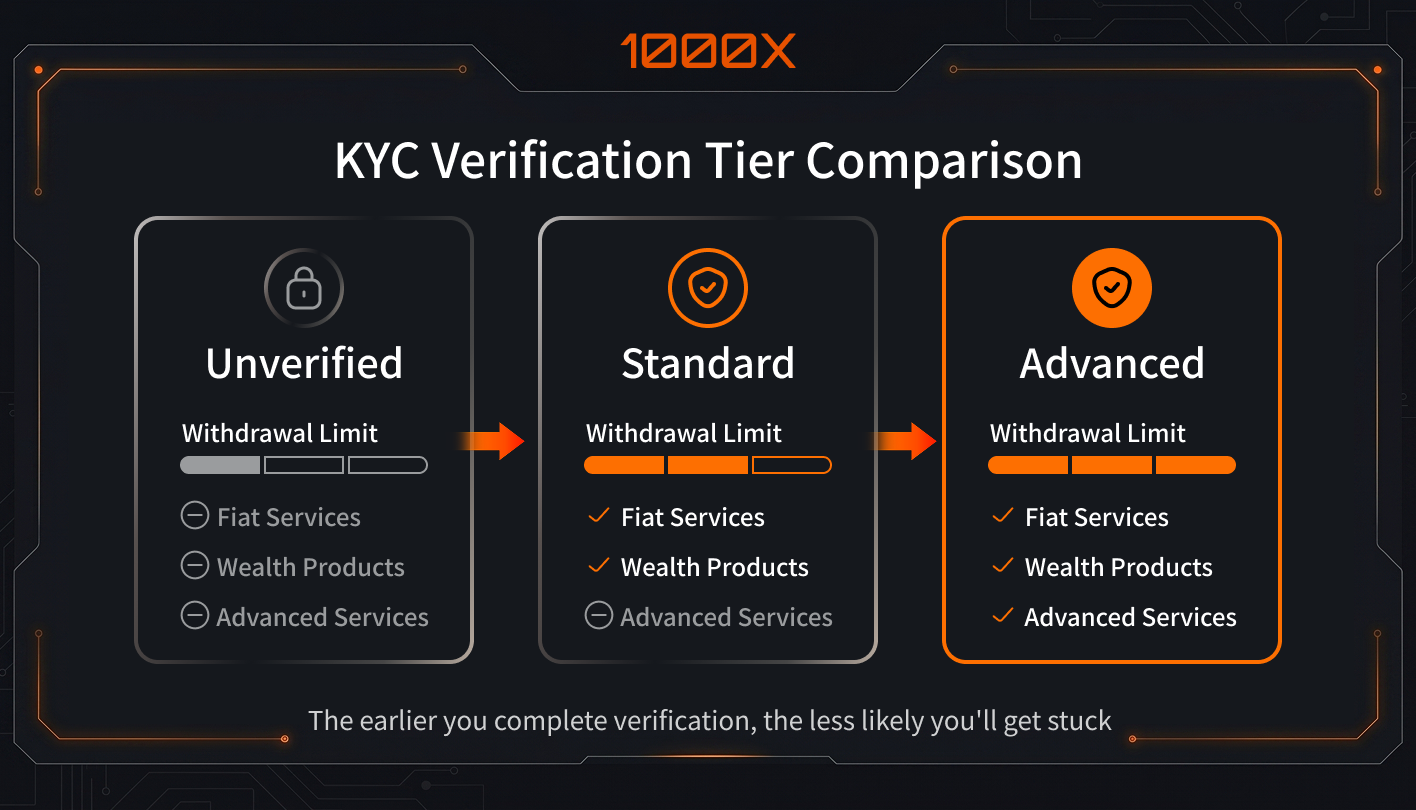
Many newcomers assume "sign up first, fill in features later." But on BYBIT, KYC (identity verification) isn't optional add-on paperwork — it's the gating condition for using the platform. BYBIT explicitly states: completing at least Standard individual verification is the baseline requirement for all BYBIT products and services; some regions, products, or services may require higher tiers on top of that.
KYC affects three things most directly. First, available features: fiat services, earn products, certain campaigns, and advanced services are tied to verification status. Second, withdrawal limits: official docs show unverified accounts' daily withdrawal cap is significantly lower than after completing Standard or Advanced; third, account-handling flow: account recovery, profile corrections, ongoing compliance review — fully KYC'd accounts tend to be processed more smoothly.
Standard verification primarily needs identity proof; Advanced adds proof of address. Total processing time is usually about 15 minutes, though it can stretch to 48 hours. For beginners, getting KYC done early means fewer friction points when depositing, withdrawing, or unlocking features later.
Who the
Looking at the
Good fit: you already have the habit of spending exchange funds on day-to-day purchases, use Apple Pay, Google Pay, or physical card swipes, and you're willing to read through limits, regional support, and fees first.
Not a great fit: you only want to buy crypto and hold long-term, rarely spend exchange funds, or live in an unsupported region, and don't care about card limits and fees. In that case, the Card usually isn't your highest priority right now.
Referral Codes Are Fine — Just Don't Let Them Override the
If a an invite code is just a promotional entry, not the platform judgment. BYBIT's referral mechanism is tied to sign-up, deposit, trading tasks, and follow-on rewards — sharers naturally lead with perks, not with the risks a newcomer should check.
What shouldn't get drowned out by a referral code: first, fees and total cost. BYBIT's trading fees vary by product type, VIP tier, and even region — the official site is clear that your actual rate depends on your personal fee page after identity verification. Second, do you actually need what's on offer — card rewards, referral bonuses, or advanced features only matter if you'll use them.
So look at referral codes — but don't reverse the order. The cleaner approach: confirm you can use it, can use it safely, and that the costs make sense for you — then check whether the bonus adds anything. Otherwise you might pocket a small reward while missing the conditions that actually shape your long-term experience.
Conclusion
Whether BYBIT works for you isn't decided by an invite code, a few reviews, or a single "is it safe?" question. This article aims to organize the key judgment points first, so you trip less and detour less. If you've read this and still feel it's a lot — or aren't sure which direction to go — just reach out. Not a strange thing to do — we'll work through it with you.


