- How to Know the Cryptocurrency Fear and Greed Index
- What emotional temperature does the 0 to 100 range represent
- Source: Volatility Community Search Index
- Analyze three reasons why extreme fear does not equate to buying points
- Downtrend Continues: When the Risk of a Fall Is Higher
- Magnifying Panic Messages Allows You To Make Wrong Decisions Faster
- VERIFY IF EXTREME FEAR CAN BE PURCHASED IN 3 STEPS
- Check trends and support levels first, then discuss when to add more
- Check today's numbers compare historical categories
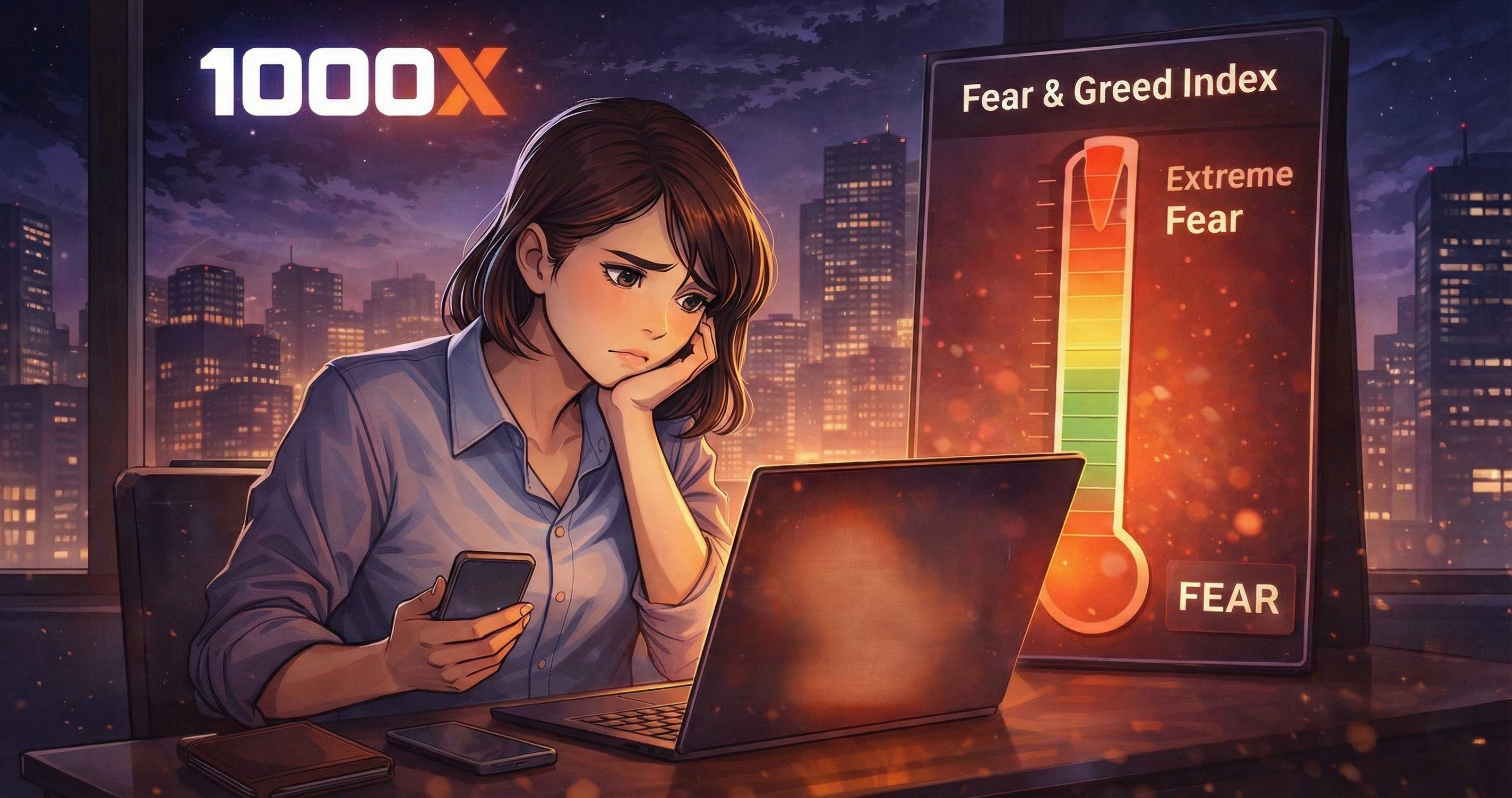
“Seeing the Fear and Greed Index go into extreme fear, is your first reaction to the bottom?” Many people use “extreme fear = where to buy” as a clue, but in the world of currencies, emotions are only clues, not conclusions. This article uses a verifiable framework to teach you how to understand the 0-100 range, avoid false signals, and put risk disclosure first.

How to Know the Cryptocurrency Fear and Greed Index
“The index jumps up and down every day, do you really know what it measures?” If you only remember “the lower the fear, the higher the greed”, it is easy to translate the emotion into a trading indication. Only by understanding the meaning of the 0-100 range and then understanding the data source behind it can you determine if this indicator is trustworthy.
What emotional temperature does the 0 to 100 range represent
“Can a score of 0 to 100 really tell you if the market is “cheap” or “dangerous”?” Many people see the Fear and Greed Index (Fear and Greed Index) and intuitively view it as a trading signal.But a more accurate use is to use it as an “emotion thermometer”: it measures market sentiment and does not directly equate to price reasonableness。
The general interpretation is 0 to 100. Lower means more fear, higher means more greed; the common range can be roughly divided into 0-25 extreme fear, 26—45 fear, 46-55 neutral, 56-75 corruption, and 76-100 extreme corruption. You can think of it as a weather forecast: very low temperatures don't mean “it will clear up soon”; it just means “it's cold right now”; it also needs to be explained by looking at wind direction (trend), terrain (support pressure), and if there are storms (leverage and news).
In fact,The most valuable part of this score is that it “reminds you which side of the group emotion you are approaching”。 When the score remains low for a long time, it may indicate that the market has entered a period of panic and concern for selling pressure; but at the same time, it also means that volatility may be greater and false rebounds are more common. High levels, on the other hand, don't necessarily drop immediately, but it often reminds you that FOMO (pursuit of higher emotions) is heating up and risk control should be more conservative. The focus is not on supporting balance, but on establishing rules: emotions are only responsible for reminders; decisions must also be submitted to validation processes and risk controls.
Source: Volatility Community Search Index
“Have you ever thought that the score on the Fear and Greed Index is actually “calculated”, what data does it use to calculate it?” If you do not know the source of its data, you can easily use the “emotional component” as an accurate signal. Therefore, in times of extreme fear, it falls to the bottom too early and is forced to rise when extremely greedy. The Crypto Fear and Greed Index (Crypto Fear and Greed Index) does not usually rely on a single metric, but rather combines multiple “emotion agent variables”: the three most common types are price/volatility and trading volume, social media and discussion popularity, and behavioral signals such as Google Search. You can imagine it listening with a different microphone: market fluctuations and volume can be like “how loud is the price”, the community is like “what is everyone arguing about”, and search volume is like “more and more people are beginning to anxiously look for answers”.
Let's look at volatility and trading volume first: When prices fluctuate sharply, trading volume energy rises, this usually indicates that panic or excitement is dissipating; especially during sharp falls, bullish volatility lowers sentiment scores, but this may also only be short-term distortions caused by “event shocks”. Let's also look at the social metrics: popular posts, engagement, and positive to negative sentiment ratio for specific keywords. They are often used to estimate that people are biased towards FOMO or sales in a panic; however, communities are susceptible to trends and even sales, and the noise is the greatest. Finally, the search volume: when “Will Bitcoin crash?” and “Can I buy now?” When such searches suddenly increase, this usually means a new wave of anxiety; however, the search activity is slow and usually increases significantly only after the emotion dissipates.
So the key here is not “it's standard,” but you need to know when it's wrong: When information surfaces explode, the leverage is cleared, and when the community has a rhythm, the score may reflect the “noise peak” rather than the end of the trend. The most stable use is to use it as a reminder and then use your own verification process (trend/support, historical classification, location rules) to make decisions.
Analyze three reasons why extreme fear does not equate to buying points
“Why is it that the more afraid you are to make progress in the market, the more likely you are to buy in the middle of a fall?” When currency prices fall, sentiment collapses before the trend ends; moreover, the news side can easily spread panic, leading people to misinterpret “low sentiment” as “cheap prices”. This section breaks down the three most common mistakes and tells you which conditions are missing at the point of purchase.
Downtrend Continues: When the Risk of a Fall Is Higher
“Have you experienced it too: When you see extreme fear, it progresses. The result is not a reaction, but a continuous collapse?” It's not because you have poor judgment, but that you mistake “low sentiment” for “the trend needs to end.” When the downtrend does not stop, the fear greed index falls into extreme fear, which usually only indicates that the market is accelerating panic and there is no guarantee that the fall has ended. Because the essence of the trend is “persistence”: once the price enters a clear downward channel, there are many seemingly cheap ranges, but each time the “cheap” may only revive before the next bearish period. The key to determining “higher risk of falling” is not how low your score is, but whether you see evidence of a trend reversal. You can start by using a simple framework:
- Whether or not to maintain a low point: whether it forms a “no longer damaging the bottom” structure (e.g. continuous downward failure).
- Whether the bounce continues: Whether the bounce can return to a critical position (common practice is to check that important support/stress is recovering, not just a single positive line).
- Whether the momentum of the decline is cooling: If the degree of each fall continues to increase, it means that panic may not be resolved.
When none of these three points appear, the extreme fear you see is more like the “lowest emotional point” rather than the “lowest price point”. What is most likely to happen at this time is to repeatedly cut the bottom in the middle of a fall, and it gets heavier and ends up being forced to stop and take orders in a worse position. A more stable approach is to change the action to “slow down”: first reduce a single investment, adopt batches (such as DCA) and strict position limits, and write down the stop loss conditions clearly so that the risk passes regulatory closure first.
Magnifying Panic Messages Allows You To Make Wrong Decisions Faster
“Why is it easier for you to make decisions in the 'time of least dynamic' every time the market panics?” Since panic news in the currency world is not simple information, it is often packaged with “time pressure+emotional language” as an indication for immediate action: trading events, severe regulatory shocks, liquidation waves, screenshots of fake news... Once disseminated in the community, this content can quickly lead to corruption Lowering your heart rate can also cause you to misunderstand “If you don't do it now, it's too late.” But the problem is: the faster the news is spread than the speed of verifying the truth, and the earlier you follow up, the more likely you are to take noise as a conclusion. With a simple checklist, you can check for yourself the three most common “decision errors” caused by panic messages:
- Treat a single event as a growth trend: For example, seeing a vulnerability will directly determine the “beginning of a crash,” ignoring that markets have been digested for a long time or have limited impact.
- Take full action when information is incomplete: The most dangerous thing to panic is not to sell, but to “do it once and for all” and lock yourself in the wrong direction.
- Driven by Fake Messages/Fake Customer Service: Phishing links, fake announcements, and fake customer service are most likely to show up in bad times, exploiting your anxious attention vulnerabilities.
A more stable way is to let the “message” enter a verifiable process rather than giving up emotions. You can stop watching in three steps:
- parked: First set a 15-minute cooldown time to avoid ordering during peak emotional periods.
- watch: Read only two types of verifiable sources (official announcements, trusted media/linked data), not screenshots.
- tests: Use the price structure and quantity to confirm (whether the position is really broken, if there is continuous throwing pressure) and then decide whether to work, how much.
The point of doing this is: Even if the Fear and Greed Index shows extreme fear, you will not be driven away by a “panic attack”, but instead replace your impulses with controlled choices using rules.
VERIFY IF EXTREME FEAR CAN BE PURCHASED IN 3 STEPS
“If you don't rely on emotion, how do you check “really close to the point of purchase”?” The most stable approach is to put “sentiment” back in a supported position and use a process that can be verified and reversed: first check trends and support, then check historical positions using today's numbers, and finally discuss batch processing and wind control. What you get is a road, not a slogan.
Check trends and support levels first, then discuss when to add more
“You also wonder: Since the Fear and Greed Index is already very scary, will I buy at the low if I increase the current code?” Let's change this sentence to a more secure version: It's not about whether you can add code, but “whether there is a trend that allows you to add code”. Because in the currency industry, sentiment only tells you “the market is cold”, but trends and support levels only tell you “will it continue to crash if the chassis does not exist?” If you skip this step, extreme fear can easily become a “reason to increase the number in the drop” and add a duvet cover at the end. One framework that can be used in practice and is also easy to replicate is Structure First, Location Later:
- Determine the direction of the trend first:At least confirm that it is currently rising, stable or falling. If you're talking about adding code under a downtrend, the risk is inherently higher; there's room for a “batch layout” only when the plan is good; an uptrend is more suited to using round-trip support for code additions as a plan type.
- Find out if the support location is valid again:The support position is not just a drawn line, it must be able to “hold after testing”. A simple way to judge is: a quick withdrawal after a fall, or no more than one drop, indicates that the buying market has begun to grip; on the contrary, if each bounce is weaker and deeper each time, then the support is not actually effective.
- Finally, let's talk about the time and proportion of the addition:When you see evidence of “no more falling lows” or “resuming key positions”, break the code into small steps (for example, 3 to 5 times) and write a “stop adding code if you fall” rule in advance to avoid more and more falls.
The advantage of doing this is that you do not use the emotional score to determine the position, but use Trend+Support Validity to determine if you are eligible to add code. THE FEAR AND GREED INDEX IS HERE ONLY AS A REMINDER: MARKET SENTIMENT IS COLD AND VOLATILITY IS LIKELY TO BE GREATER, SO YOUR GROWTH SHOULD BE CONSERVATIVE, BATCH AND SCALABLE.
Check today's numbers compare historical categories
“Seeing today's Fear and Greed Index so low, do you think it must be near the bottom?” The usual problem is: you only look at the “current score”, not where it is in history. The same is 20 minutes. A short correction in a bull market may rebound quickly; in a prolonged bear market decline, it may remain at a low level for many weeks. A more stable way is to put “Today's Value” in a historical context: use percentages (percentages) or frequency ranges. Whether this score is “Accidentally Cold” or “Ordinary Cold”, we can avoid misjudging low sentiment points as low price points. You can use a simple three step comparison to convert it into an executable process:
- First, determine which emotional range today's score belongs to:Examples include extreme fear (0—25) or fear (26—45). This step is just about classification; there is no conclusion.
- Let's look again at the frequency of “almost 1 year/almost 3 years”:How many times has there been a similar low score in the past year? How many days or weeks does one maintenance usually take? If lows are common, this means that the market is under prolonged stress and the risk of a fall is naturally higher.
- Contrast the “market reaction after a low” rather than just a rebound:What you need to pay attention to is not “whether there are any changes the next day”, but “whether repairs can be continued”: for example, whether prices remain low, whether they gradually recover from critical stresses, and whether fluctuations cool down. These are key to translating emotional signals into verifiable evidence.
What it means to put today's numbers in the historical classification range is to allow you to switch from “intuition” to “opportunity”. When you know that a score is very rare in history (for example, at a very low ranking), you can warn: the market may be close to the emotional extreme, but still not equal to buying immediately; what you can do is change the action to “experiment with small steps”: reduce a position, a batch of scores (such as DCA), and Clearly write down the failure condition (stop adding code where it falls). Use emotion to remind, history to calibrate,Using wind control to save lives
。